Hemp-Derived THCA Products: What They Are and How They Work
Walk into any shop today and you will see a category that looks almost like it appeared overnight: hemp-derived THCA products. They come as gummies, flower, vapes, tinctures, and concentrates, and they are marketed with a confidence that can feel bigger than the underlying science. The truth is more nuanced. THCA is not just a marketing term, and “hemp-derived” is not a magic label. What matters is the plant chemistry, the processing, the dose, and how your body responds.
If you have ever wondered what THCA actually does, why some products seem stronger than others, and why “THCA products near me” can lead to wildly different results from one store to the next, this is the real guide.
THCA in plain language: what it is and why it’s different
THCA stands for tetrahydrocannabinolic acid. It is a cannabinoid that occurs naturally in raw cannabis plants, including hemp varieties. The key detail is that THCA is the acidic “starter form.” In most plants, THCA is abundant before heat exposure.
When you apply heat, THCA decarboxylates. That process removes the carboxy group, converting THCA into delta-9 THC. In practice, that means THCA is closely linked to THC effects, but not identical in every product.
Here is the lived, practical reason people notice a difference: the same total cannabinoid percentage can behave very differently depending on whether the product is heated, aged, or consumed in a way that promotes decarboxylation.
- If a product is consumed cold, or engineered to minimize activation, you may feel effects that are milder or delayed compared with a traditional THC product.
- If it is heated during production, heating during consumption is likely, or the form contains already-activated compounds, the experience can be much closer to THC.
This is why people say “THCA products” can hit differently. They are not always “non-THC,” and they are not always the gentle alternative some labels imply.
What “hemp-derived” really tells you, and what it does not
The phrase hemp-derived THCA products usually means the starting material was hemp rather than marijuana. Hemp and marijuana are not chemically different in the way people often assume. They are defined largely by regulatory and cultivation thresholds, plus the legal framework around the final product.
From a consumer standpoint, the practical takeaway is this: hemp-derived products can come from processes designed to stay within certain legal constraints. That does not automatically guarantee consistency, safety, or how your body will feel.
“Derivation” is about the supply chain. Your actual experience depends on:
- the plant profile (how much THCA the starting plant carried)
- the extraction method
- the formulation (what other cannabinoids and solvents or carriers are present)
- the product’s intended consumption method (heated vs non-heated)
- the accuracy of the label and its lab report
When you are searching for best thca products or thca products sold near me, it helps to treat “hemp-derived” as a starting point, not a finishing line.
How THCA products work in the body
THCA interacts with the body through cannabinoid receptors and related signaling pathways. The broad idea is the same family as THC, but the effect profile is not always identical.
In the real world, the thca products most noticeable difference comes from conversion. If enough decarboxylation happens, THCA becomes THC and produces the psychoactive effects many people associate with cannabis. If conversion is minimal, the result can be more subtle. Some users report a more “clear” or less intoxicating experience, while others still feel strong effects depending on dose and product.
There is another layer that rarely gets explained on product pages: many THCA items are formulated with a spectrum of cannabinoids, not THCA alone. A “THCA gummy” might include THCA-rich extract, plus cannabidiol, minor cannabinoids, and flavored carriers. A “THCA flower” product might be marketed as THCA-forward, but it can still have a portion of naturally decarboxylated cannabinoids, or it might convert some during smoking or vaping.
So when someone tells you their THCA product worked “like a THC edible” or “like something completely different,” they are usually telling the truth for their specific product and their specific conversion pattern.
Product forms: why gummies, flower, vapes, and tinctures feel different
Different THCA products can behave like different products even if they share the same cannabinoid headline. Here is how the form changes the practical physics of the experience.
THCA flower
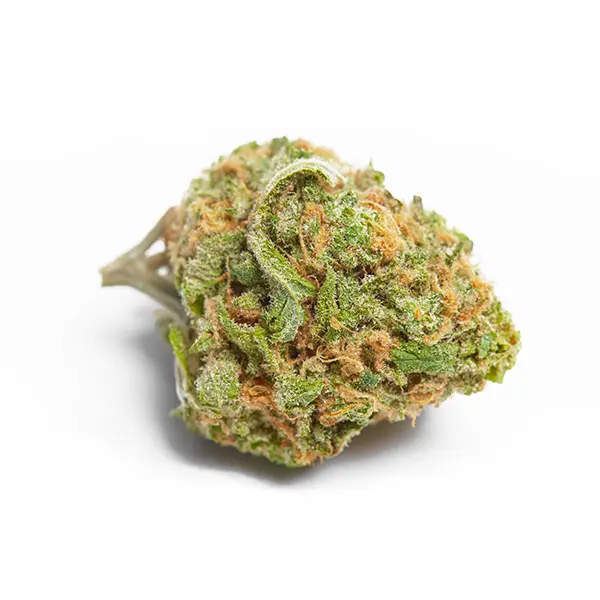
Flower is exposed to heat as soon as you ignite it. That means THCA decarboxylates during consumption. In other words, THCA flower is often closer to classic THC flower behavior, just with different starting proportions.
If you have ever bought hemp flower thinking it would be gentler and then got a strong, fast effect, this is usually why. Heat activates it.
Vapes and heated concentrates
Vapes and dabs add heat in a more controlled way than smoking, but they still activate THCA. Also, temperature settings and coil behavior can change how much of the “raw” cannabinoid actually converts.
If you want predictable results, you need a consistent device and consistent product. That’s not the kind of variable most label claims account for.
Edibles and gummies
Edibles are different because decarboxylation can happen in processing or in the body’s digestive environment. Many edible formulations include some activation already, and absorption can be slower. That combination often creates a “delayed but longer” timeline.
The most common complaint I hear from people is not “THCA doesn’t work.” It is “I took the wrong dose because the label was unclear and the onset confused me.” If you are used to quick THC inhalation, edibles can feel unpredictable until you learn your personal timing.
Tinctures and oils
Sublingual tinctures can feel more consistent than inhalation because you control how you use them and because you are not triggering immediate heat. Still, tinctures vary wildly in formulation strength and in whether the extract has already been activated. Two “THCA tinctures” can feel nothing alike if one is mostly THCA and another includes converted THC fractions.
If you are trying to find thca products near me with the least surprises, tinctures are often a better testing ground because you can start low and adjust, rather than immediately inhaling activated material.
Reading labels like a skeptical customer
The biggest difference between decent THCA products and disappointing ones is often not the marketing. It is the lab report, the testing quality, and how the numbers translate into real dosing.
Here is the part I wish more buyers understood: “percent” can mislead, and “total cannabinoids” can hide the important distribution between THCA and delta-9 THC.
Look for these elements on the packaging:
- a clear breakdown of THCA versus delta-9 THC (not just one headline number)
- a third-party certificate of analysis, ideally matching the batch you are holding
- testing for contaminants such as pesticides, heavy metals, residual solvents, and microbial activity, depending on the product type
- lot numbers and traceability (if the brand cannot connect the label to a lab result, you are guessing)
If you are comparing best thca products across brands, do not compare only “mg per serving.” Compare the ratio of THCA to delta-9 THC and the presence of other cannabinoids.
And yes, I know that sounds picky. It is worth being picky. When you have to troubleshoot your own experience later, the label clarity becomes the difference between “it’s tolerance” and “the product was different than described.”
A quick way to sanity-check dosing
If you are new to THCA products, you will save yourself a lot of trial and error by doing one simple thing: calculate how many milligrams of THCA you are actually taking per time window.
A gummy labeled “THCA” might list a total figure per serving. But serving sizes can be slippery. One brand may define a serving as one gummy, another as two. Some labels separate THCA from THC, some don’t highlight the THC fraction the way your brain expects.
If you want to avoid the “too strong, too fast, too late” edible trap, start with a conservative dose and wait longer than you think you need before deciding whether it is working.
What to expect: the effect timeline and the “it depends” that is actually real
People ask whether hemp derived thca products can get you high. The honest answer is yes, sometimes, depending on conversion and dosage. The more accurate answer is that you should expect a spectrum from mildly intoxicating to very noticeable effects.
The practical timeline varies by form:
- Inhaled forms often hit within minutes, similar to THC inhalation.
- Edibles can take longer, sometimes requiring a full digestion cycle before you feel the full effect.
- Sublingual tinctures often land in the middle, with a slower rise than inhalation but less delay than many edibles.
One morning, I watched a friend try a THCA gummy that promised a “balanced” experience. They took the full dose listed on the package, went about their routine, then felt surprised later. Not because THCA is mysterious, but because edibles do not forgive impatience. The gummy was doing exactly what the formulation and absorption allowed it to do. Their expectations were the mismatch.
That mismatch happens constantly when people shop casually for thca products sold near me. Different brands, different formulations, and different “serving” definitions turn one label into ten possible experiences.
Trade-offs and edge cases you should know before buying
THCA products can be legitimate tools for cannabinoid wellness, but the edges hemp derived thca are where people get frustrated or uncomfortable.
Potency variability across brands
Even within the same “THCA” category, potency can vary. Two gummies might both be marketed as “THCA,” but one can contain a meaningful delta-9 THC fraction while the other is mostly THCA. That alone changes the effect.
If you are buying repeatedly, you will also see changes over time because each batch can differ. This is where a batch-matched COA matters.
Heat-sensitive outcomes
Because THCA converts with heat, the same product can change dramatically if it is consumed differently. For example, vaping at a higher temperature might activate more THCA, or it might burn off terpenes that shape your subjective experience.
“Feels like THC” for some users, “doesn’t” for others
Personal biology matters. Metabolism, body mass, gut response, and tolerance patterns can all shift how you interpret effects. Some people metabolize faster, some feel anxiety from THC-like intoxicants, and some are sensitive to specific minor cannabinoids.
If you already know you react strongly to THC, do not assume THCA products are risk-free. They can still convert.
Drug testing and legal ambiguity
I am not going to offer legal advice, but I will say this from a consumer safety perspective: cannabinoid products can create positive drug test outcomes depending on your test type and metabolism. If you have a reason to protect test results, treat all THC-adjacent products as potentially risky.
Also, laws around hemp derived thca products can change at the state and local level. If you are relying on a specific legality claim, verify it yourself with the most current information available where you live.
How to choose hemp-derived THCA products you can trust
When someone searches thca products near me, they are often doing more than finding a store. They are trying to reduce uncertainty. That is smart. But store availability does not replace product quality.
Here are practical steps that actually help:
- Choose products that provide batch-specific lab results. If the brand only shows a generic document, you are not getting the benefit of testing for your exact item.
- Look for transparent cannabinoid breakdown, including THCA and delta-9 THC amounts. If it is vague, your dosing decisions get harder.
- Start with a dose that feels conservative for your first session, then adjust. You are not trying to prove anything.
- Decide your form based on your goal. If you want predictable dosing without heat, tinctures and measured edibles often provide a calmer learning curve.
- If you are new, consider sticking to one brand long enough to understand it. Switching too quickly makes every outcome feel like a mystery.
That final point matters more than people think. When you test one brand, then jump to another, your body never builds a baseline. You end up averaging chaos, and the experience becomes difficult to interpret.
Where “best thca products” often makes sense, and where it is a trap
The phrase best thca products is usually used in reviews, forums, and store signage, but it can hide important nuance. A “best” product for one person can be too strong for someone else, or it might create unpleasant anxiety.
In my experience, the best THCA products are usually the ones that are consistent and clearly labeled. Not necessarily the most advertised. Not necessarily the strongest.
If a product has unclear labeling, an oddly high THC number hidden in the fine print, or a lab report that does not match the batch, it might still “work,” but your trust drops. Trust is part of the experience. It changes how you dose and how you interpret effects.
Building a personal approach: a realistic first-time plan
If you are trying hemp derived thca products for the first time, you do not need to go extreme. You need a controlled trial.
The simplest approach is to start low, separate sessions by enough time for the full effect to play out, and keep notes. Write down the product form, the serving amount, the THCA and delta-9 THC numbers if provided, and how long it took to feel onset. This is not obsessive, it is how you avoid repeating the same mistake.
A short example: a person I know started with a single low-dose gummy, waited several hours, and only then decided whether they needed more. They ended up feeling pleasantly relaxed without the “surprise” that comes from edible onset delays. Their second dose was adjusted based on what the first dose taught them.
That is the real purpose of a good first plan. It turns your experience from guesswork into data.
A mini checklist before you buy
If you want one quick filter when you are hunting thca products sold near me, use this approach:
- Verify the product has a recent, batch-specific COA.
- Confirm the label shows THCA and delta-9 THC amounts clearly.
- Check serving size definitions so you know your real dose.
- Choose a form that matches your preference for heat versus no heat.
- Start with a conservative serving and give it enough time to fully kick in.
This isn’t about being suspicious for sport. It is about making your first session predictable.
Common questions people ask when shopping
“Will THCA get me high?”
It can, depending on conversion to THC and the delta-9 THC fraction present. If the product is heated during use, conversion is more likely. Even non-heated products can contain small THC fractions from processing or natural decarboxylation.
“Why do some THCA products feel stronger than others?”
Usually because of differences in cannabinoid ratios, activation level, and how the product is consumed. Consistency of extraction and formulation matters as much as the THCA marketing claim.
“What should I look for when I search for thca products near me?”
Look for brands with transparent testing and consistent labeling. Store selection helps with convenience, but product transparency determines whether you can dose confidently.
Final thoughts on using THCA products responsibly
THCA sits in a gray zone for many people, not because it is complicated in a scientific sense, but because real products are messy. Plants vary, processes vary, labels vary, and human responses vary. That is why the most useful advice is not a single promise like “it will feel calm” or “it will never get you intoxicated.” It is the workflow: buy from brands that show real batch testing, understand what “THCA” means for your chosen form, and dose with patience.
If you approach hemp-derived THCA products like you would any other potent substance, you get more control and fewer surprises. And once you find a product that is consistent, you stop chasing the idea of “the best thca products” and start using what works for your body, your schedule, and your goals.